COMPUTATIONAL DESIGN OF TWO-DIMENSIONAL MATERIALS FOR ENERGY STORAGE AND CONVERSION
Keywords:
Two-dimensional materials, density functional theory, computational materials design, energy storage, energy conversion, band gap, density of states, chemical bonding, optical properties, ion diffusion, heterostructuresAbstract
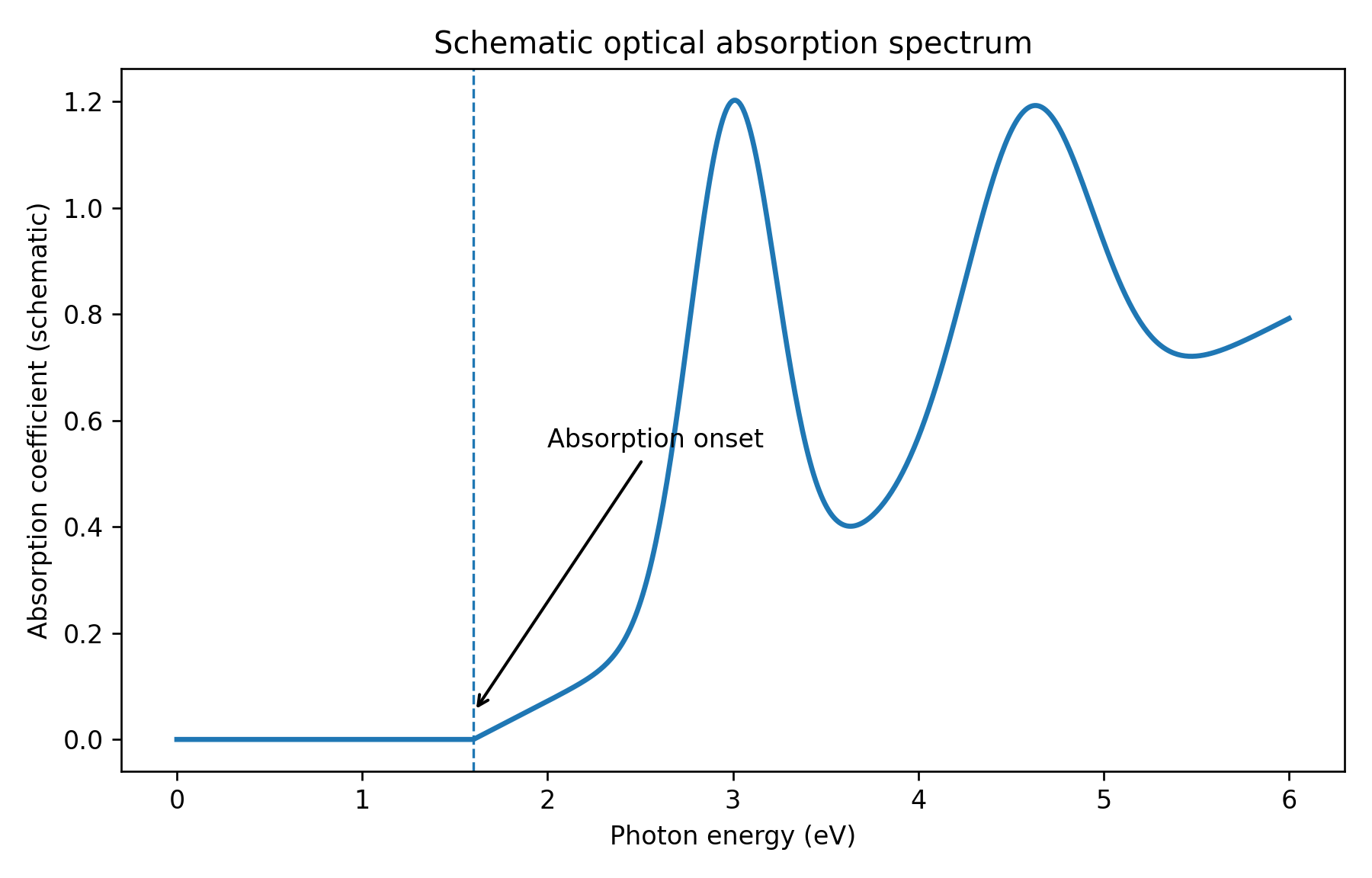
Two-dimensional (2D) materials provide a versatile platform for energy-storage and energy-conversion research because their atomic thickness, exposed surfaces, tunable electronic states, and structural flexibility allow their properties to be engineered at the atomic scale. This article presents a computational framework for studying 2D materials using density functional theory and related first-principles techniques. The approach begins with construction and geometry optimization of a candidate monolayer, followed by stability assessment and detailed analysis of electronic, bonding, and optical properties. Structural calculations establish equilibrium lattice parameters, bond lengths, and local coordination, while formation energies, phonon spectra, and finite-temperature simulations can be used to evaluate stability. Electronic band structures distinguish metallic and semiconducting behavior and provide information about direct or indirect band gaps. Density-of-states and projected-density-of-states calculations identify the atomic orbitals that dominate the valence and conduction states and help explain charge transfer and chemical bonding. Optical calculations based on the complex dielectric function provide information about absorption, reflectivity, and other light–matter interactions. For energy storage, the same framework can be extended to ion adsorption, migration barriers, theoretical capacity, and voltage. For energy conversion, band alignment, charge separation, surface adsorption, and reaction free energies become important. Defect engineering, substitutional doping, strain, phase control, and heterostructure formation are discussed as routes for tuning material performance. The graphical explanations included in this article are intentionally schematic: they illustrate how computational outputs are interpreted and are not presented as experimental measurements or as numerical results for one specific compound. The overall framework demonstrates how computational materials science can narrow the search space for stable and functional 2D materials and guide experimental work toward promising energy technologies.
Downloads
References
1. Hohenberg, P., & Kohn, W. (1964). Inhomogeneous electron gas. Physical Review, 136, B864–B871.
2. Kohn, W., & Sham, L. J. (1965). Self-consistent equations including exchange and correlation effects. Physical Review, 140, A1133–A1138.
3. Perdew, J. P., Burke, K., & Ernzerhof, M. (1996). Generalized gradient approximation made simple. Physical Review Letters, 77, 3865–3868.
4. Kresse, G., & Furthmüller, J. (1996). Efficiency of ab-initio total energy calculations for metals and semiconductors using a plane-wave basis set. Computational Materials Science, 6, 15–50.
5. Kresse, G., & Furthmüller, J. (1996). Efficient iterative schemes for ab initio total-energy calculations using a plane-wave basis set. Physical Review B, 54, 11169–11186.
6. Heyd, J., Scuseria, G. E., & Ernzerhof, M. (2003). Hybrid functionals based on a screened Coulomb potential. Journal of Chemical Physics, 118, 8207–8215.
7. Manzeli, S., Ovchinnikov, D., Pasquier, D., Yazyev, O. V., & Kis, A. (2017). 2D transition metal dichalcogenides. Nature Reviews Materials, 2, 17033.
8. Wang, Q. H., Kalantar-Zadeh, K., Kis, A., Coleman, J. N., & Strano, M. S. (2012). Electronics and optoelectronics of two-dimensional transition metal dichalcogenides. Nature Nanotechnology, 7, 699–712.
9. Chhowalla, M., Shin, H. S., Eda, G., Li, L.-J., Loh, K. P., & Zhang, H. (2013). The chemistry of two-dimensional layered transition metal dichalcogenide nanosheets. Nature Chemistry, 5, 263–275.
10. Voiry, D., Mohite, A., & Chhowalla, M. (2016). Phase engineering of transition metal dichalcogenides. Chemical Society Reviews, 45, 5577–5590.
11. Pomerantseva, E., & Gogotsi, Y. (2017). Two-dimensional heterostructures for energy storage. Nature Energy, 2, 17089.
12. Anasori, B., Lukatskaya, M. R., & Gogotsi, Y. (2017). 2D metal carbides and nitrides (MXenes) for energy storage. Nature Reviews Materials, 2, 16098.
13. Tan, C., Cao, X., Wu, X.-J., et al. (2017). Recent advances in ultrathin two-dimensional nanomaterials. Chemical Reviews, 117, 6225–6331.
14. Jariwala, D., Sangwan, V. K., Lauhon, L. J., Marks, T. J., & Hersam, M. C. (2014). Emerging device applications for semiconducting two-dimensional transition metal dichalcogenides. ACS Nano, 8, 1102–1120.
15. Ha, J., et al. (2024). Engineered two-dimensional transition metal dichalcogenides for energy conversion and storage. Chemical Reviews, 124, 9376–9456.
Downloads
Published
License
Copyright (c) 2025 Tawsif Ahmad, Moneeb Ahmad, Musa Khan, Waqar Ahmad (Author)

This work is licensed under a Creative Commons Attribution 4.0 International License.